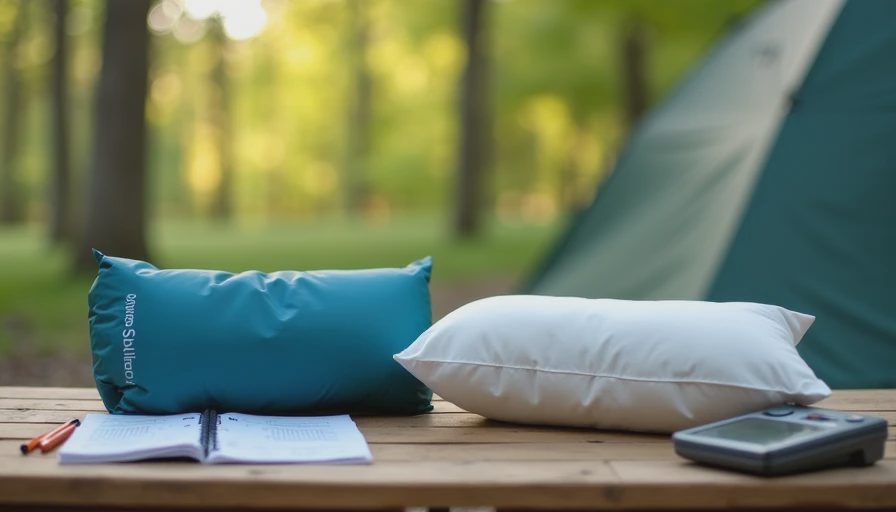
I weighed it so you don't have to.
I used to be a "roll up a jacket" guy. Stuff it in a stuff sack, call it good, wake up with a neck that felt like I'd slept on a bag of rocks. Then I had kids, and I realized: if I'm going to be woken up at 6 AM by a 7-year-old asking for pancakes, I need to at least start the day without a crick in my neck.
So I tested six camp pillows. Inflatable, compressible, hybrid, ultralight. I weighed them. I packed them. I slept on them. And I kept a log of what I'd call "neck regret"—that specific feeling of waking up and immediately knowing you made a bad choice.
Here's what I found.
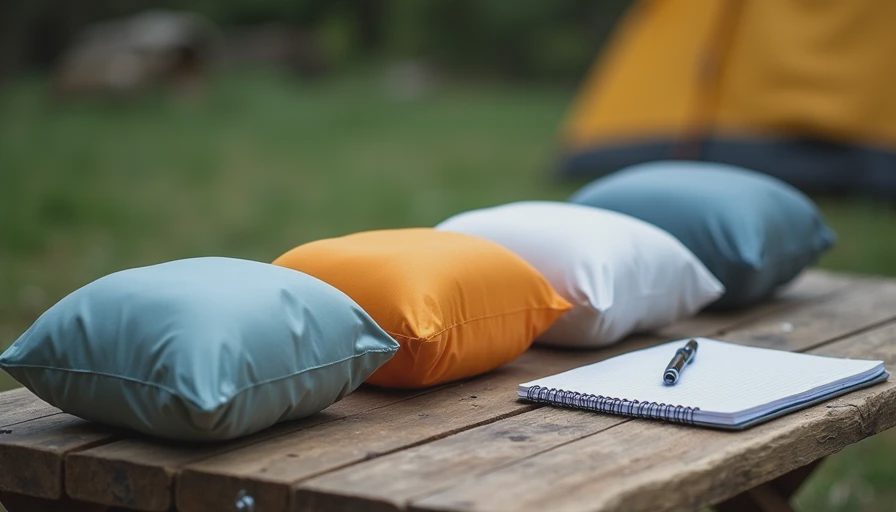
The Contenders
Pillow | Type | Claimed Weight | Measured Weight | Packed Size |
|---|---|---|---|---|
Sea to Summit Aeros Ultralight | Inflatable | 2.3 oz | 2.5 oz | Tennis ball |
Therm-a-Rest Compressible | Compressible foam | 9 oz | 9.8 oz | Grapefruit |
Nemo Fillo | Hybrid inflatable/foam | 8.9 oz | 9.3 oz | Softball |
Exped MegaLite | Inflatable | 3.5 oz | 3.7 oz | Orange |
Trekology ALUFT | Inflatable (budget) | 4.5 oz | 4.8 oz | Orange |
Cocoon Ultralight Air-Core | Inflatable | 2.8 oz | 3.0 oz | Tennis ball |
All weights include the stuff sack, because that's how you'll actually carry them.
Round 1: Packed Size and Weight (The Numbers)
This is the easy part. Put them on the scale, measure the compressed size, rank them.
The winner for weight: Sea to Summit Aeros Ultralight at 2.5 oz. It's almost nothing. You could forget you're carrying it.
The winner for packed size: Also the Sea to Summit Aeros—it compresses to about the size of a tennis ball.
The heaviest: Therm-a-Rest Compressible at 9.8 oz. Almost four times the weight of the Aeros.
The bulkiest: Therm-a-Rest Compressible again, at grapefruit size. That's fine for car camping, not great for backpacking.
The middle ground: Exped MegaLite and Cocoon Ultralight are both lightweight and relatively small. Good balance if you want a bit more support than the Aeros offers.
The budget standout: Trekology ALUFT at $20–25 is impressively light and packs small, though you can feel the difference in materials compared to premium options.
Round 2: Comfort and Support (The Subjective Test)
I slept on each pillow for at least one night in my backyard (same pad, same sleeping bag, same Ohio spring weather). I kept notes on:
Height/thickness: How high does it lift your head off the pad?
Stability: Does your head slide off? Does it stay in place?
Firmness: Can you adjust the firmness? Is it too squishy or too hard?
Surface feel: Is the fabric sticky or slippery? Does it feel like plastic?
Here's what I found:
Sea to Summit Aeros Ultralight
Height: Good. About 4 inches inflated, which is enough for most side sleepers.
Stability: Fair. The curved shape keeps your head in place better than a flat pillow, but it does shift a bit.
Firmness: Adjustable via the valve. You can make it firm or soft.
Surface feel: The fabric has a bit of texture, so it's not slippery. Feels less like a pool toy than some inflatables.
Neck regret rating: Low. Woke up with a neutral neck.
The catch: It's not very wide. If you move around a lot, you might end up off the pillow during the night.
Therm-a-Rest Compressible
Height: Medium. The foam compresses to about 3–3.5 inches under head weight.
Stability: Excellent. The foam stays put and doesn't slide.
Firmness: Not adjustable beyond how much you compress it. It's soft but supportive.
Surface feel: The brushed fabric is the nicest of the group. Feels like a real pillow.
Neck regret rating: Low. Very comfortable.
The catch: It's heavy (9.8 oz) and bulky (grapefruit size). It's for car camping, not backpacking.
Nemo Fillo
Height: Good. About 3.5–4 inches.
Stability: Very good. The inflatable base is topped with a thin foam layer, which creates a stable platform.
Firmness: Adjustable via the valve. The foam layer adds a nice soft top.
Surface feel: The foam surface is fabric-covered and comfortable.
Neck regret rating: Low. Very comfortable, second only to the Therm-a-Rest.
The catch: At 9.3 oz, it's almost as heavy as the Therm-a-Rest, though it packs smaller.
Exped MegaLite
Height: Good. About 4 inches.
Stability: Good. The shape is more rectangular, which gives more surface area than the Aeros.
Firmness: Adjustable. The valve design is intuitive.
Surface feel: Slightly slippery but not uncomfortable.
Neck regret rating: Low. Solid performer.
The catch: The valve can be a bit fussy to close without losing air.
Trekology ALUFT
Height: Good. About 4 inches.
Stability: Fair. The flat shape means your head can slide off.
Firmness: Adjustable.
Surface feel: The fabric is the slipperiest of the group. If you're a restless sleeper, your head will slide.
Neck regret rating: Medium. Woke up with a slight crick.
The catch: It's a budget pillow, and you can feel the difference in materials. It works, but it's not premium.
Cocoon Ultralight Air-Core
Height: Good. About 4 inches.
Stability: Good. The slightly curved shape keeps your head in place.
Firmness: Adjustable.
Surface feel: Fabric has a brushed texture, not too slippery.
Neck regret rating: Low. Solid performer.
The catch: The valve is a bit small and fiddly to adjust.
Round 3: Real-World Kid Test
I asked the 7- and 9-year-olds to try each pillow. Their feedback was... direct.
Top picks: Therm-a-Rest Compressible and Nemo Fillo. They like the soft fabric and real-pillow feel. They can't tell the difference between an inflatable and a compressible—they just know if it feels like a "real" pillow.
Bottom picks: Sea to Summit Aeros and Cocoon Ultralight. Too "crinkly" and "weird." Translation: the inflatable texture bothers them. They don't care about the weight savings.
The verdict for kids: If you're car camping, bring the Therm-a-Rest or Nemo. If you're backpacking and need to save weight, the kids will adapt to an inflatable, but they'll complain.

The Tradeoff Chart
Pillow | Weight | Packed Size | Comfort | Price | Best For |
|---|---|---|---|---|---|
Sea to Summit Aeros Ultralight | 2.5 oz | Tennis ball | Good | $40 | Backpackers who count every gram |
Therm-a-Rest Compressible | 9.8 oz | Grapefruit | Excellent | $35 | Car camping, side sleepers |
Nemo Fillo | 9.3 oz | Softball | Excellent | $50 | Car camping, luxury seekers |
Exped MegaLite | 3.7 oz | Orange | Good | $45 | Backpackers who want more surface area |
Trekology ALUFT | 4.8 oz | Orange | Good | $25 | Budget-conscious backpackers |
Cocoon Ultralight | 3.0 oz | Tennis ball | Good | $40 | Backpackers who want a budget inflatable |
The Bottom Line
If you're a backpacker who prioritizes weight: The Sea to Summit Aeros Ultralight is the winner. It's the lightest and smallest of the group, and it's genuinely comfortable enough for a good night's sleep.
If you're a car camper or family camper: The Therm-a-Rest Compressible is my top pick. It's heavier, but it's the most comfortable pillow in the group. The kids liked it best, and I slept better on it than any of the inflatables.
If you want the best balance of weight and comfort: The Nemo Fillo or Exped MegaLite are both solid choices. They're heavier than the Aeros but more comfortable. The Fillo's foam top is a nice touch for side sleepers who want something soft.
If you're on a budget: The Trekology ALUFT is surprisingly decent for $25. It's heavier and slipperier than the premium options, but it works. Just bring an extra shirt to wrap it in for the surface feel.
Good spec, mediocre experience? The 2.5 oz inflatable looks perfect on paper. But if it leaves you with a sore neck, it's not a good pillow for you. Some pillows are better car camping choices, and that's fine.
I'm keeping the Therm-a-Rest in my car camping gear and the Sea to Summit in my backpacking setup. Two pillows, two use cases. That's how it should work.
— Tom


Letters
No letters yet — be the first to write.