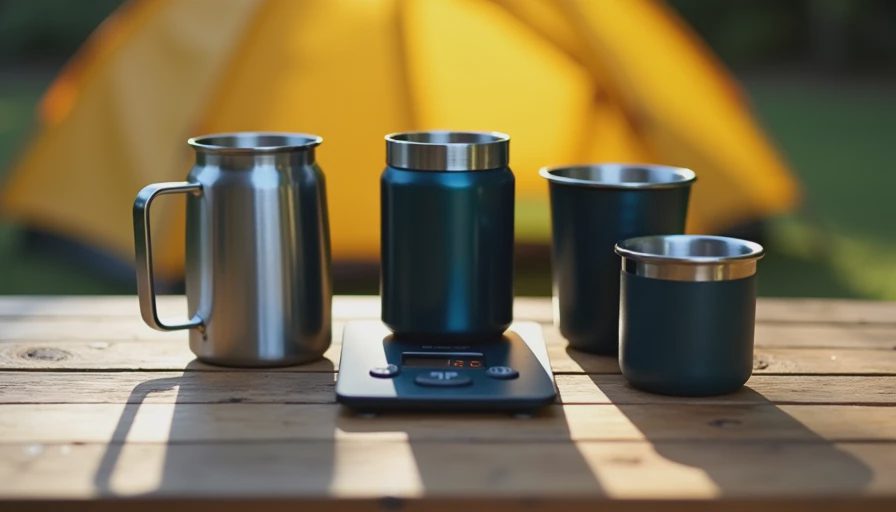
Camp mug weight is one of those details that looks trivial until you start packing the same kitchen kit for the tenth weekend in a row. Manufacturers list capacity and sometimes a rounded weight. I wanted the actual numbers on the same scale, under the same conditions, so the comparisons are honest.
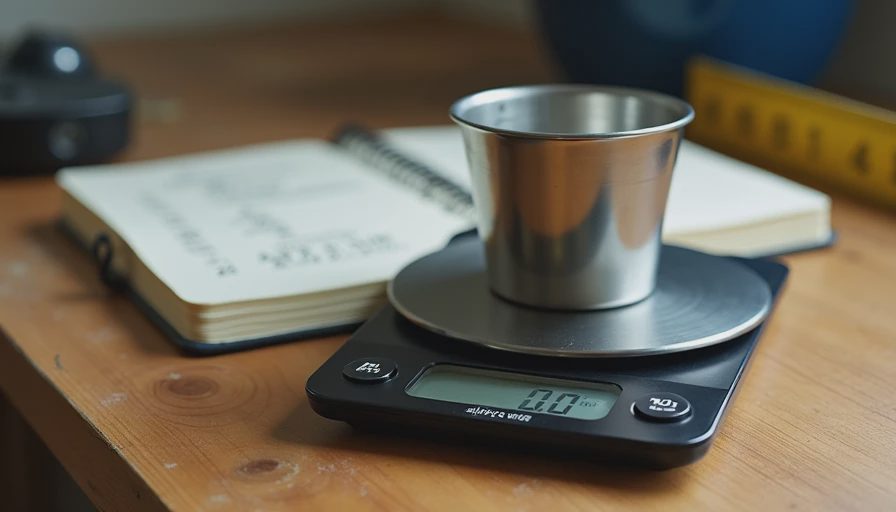
I pulled 14 common camp mugs and cups that show up in weekend kits, family totes, and lightweight setups. Everything was weighed empty, clean, and dry on a calibrated digital scale that reads to 0.1 g. I also recorded the stated capacity and the packed diameter where it mattered for nesting.
The Results
Mug / Cup | Stated Capacity | Actual Weight | Notes |
|---|---|---|---|
TOAKS Titanium 450 ml | 450 ml | 62 g | Classic ultralight baseline |
Snow Peak Titanium 450 Double | 450 ml | 98 g | Double-wall, stays cooler to the touch |
GSI Outdoors Glacier Stainless | 15 oz | 142 g | Simple, durable, no lid |
GSI Outdoors Infinity Backpacker | 17 oz | 128 g | Plastic lid, nests well |
Sea to Summit Detour Stainless | 16 oz | 135 g | Insulated, with lid |
Hydro Flask 12 oz Mug | 12 oz | 298 g | Heavy, keeps heat a long time |
Yeti Rambler 10 oz Mug | 10 oz | 312 g | Even heavier, very stable |
Stanley Classic Vacuum Mug | 16 oz | 340 g | Old-school insulated tank |
REI Co-op Camp Mug | 12 oz | 185 g | Enamel-coated steel |
MSR Titan Cup | 450 ml | 68 g | Lightweight titanium, no handle insulation |
Vargo Titanium Travel Mug | 450 ml | 79 g | Includes lid |
Copco Acadia Mug | 16 oz | 210 g | Plastic, common car-camp option |
Generic enamel camp mug | 12 oz | 168 g | Classic speckled style |
Plastic section-cup (kids) | 10 oz | 42 g | What the 7- and 9-year-olds actually use |
What the Scale Shows
Titanium single-wall mugs sit in a tight group around 60–80 g. They heat up fast, cool down fast, and require a bit of care if you’re handing one to a kid. Double-wall titanium adds roughly 30–40 g and makes the mug much more pleasant to hold with hot coffee.
Stainless options jump into the 130–150 g range for non-insulated versions. Once you move into true vacuum-insulated mugs (Hydro Flask, Yeti, Stanley), the weight more than doubles. You’re carrying 300 g+ for the privilege of coffee that stays hot for hours and a mug that can survive being dropped on gravel.
Plastic and enamel land in the middle. They’re cheap, tough enough for family use, and don’t require the same attention as thin titanium. The kids’ section-cup at 42 g is a reminder that sometimes the lightest option is the one already in the pantry.
Practical Takeaways for Weekend and Family Use
If you’re counting every gram and mostly boiling water for yourself, a single-wall titanium mug is still the efficient choice.
If you want something that doesn’t burn your hands and keeps coffee warm while you deal with kids or a second pot, double-wall titanium or a lighter stainless option is the better compromise.
Full-size insulated mugs make sense for car camping or basecamp. They are overkill for any trip where the mug has to live in a backpack.
For kids this age, a simple plastic cup or a lightweight stainless mug with a secure lid prevents more spills than any weight savings is worth.
I weighed every mug on the same scale so the differences are real, not marketing rounding. Your priorities will decide which number matters most—packed weight, heat retention, or the ability to survive a nine-year-old setting it on a rock. The scale just removes the guesswork.





Letters
No letters yet — be the first to write.