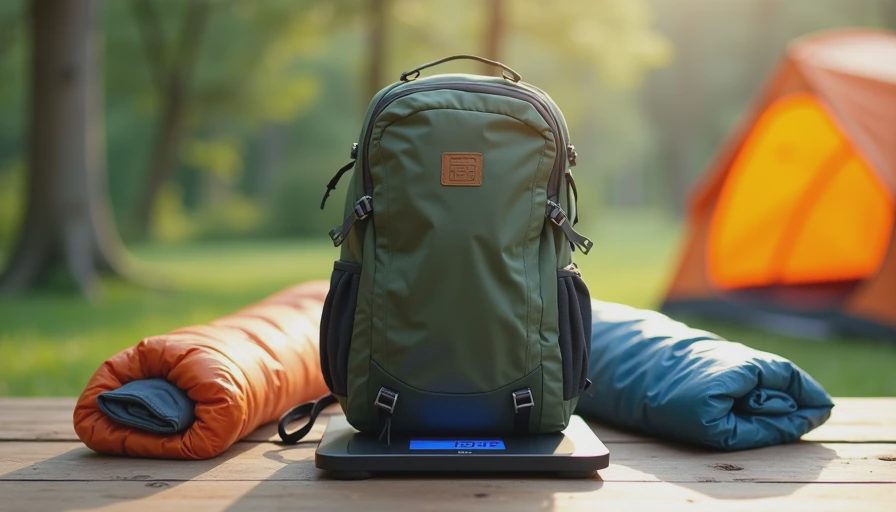
I weighed it so you don't have to.
Here's something that bothers me more than it probably should: I pull a brand-new sleeping bag out of the box, check the tag that says "Trail Weight: 2 lbs 8 oz," put it on my scale, and get 2 lbs 14 oz. Every. Single. Time.
It's not that the brands are lying, exactly. It's that they're telling you a very specific story—and leaving out the parts that actually matter when you're standing in your garage at 10 PM trying to figure out if this thing is going to break your back on tomorrow's trip.
Let's clear this up.
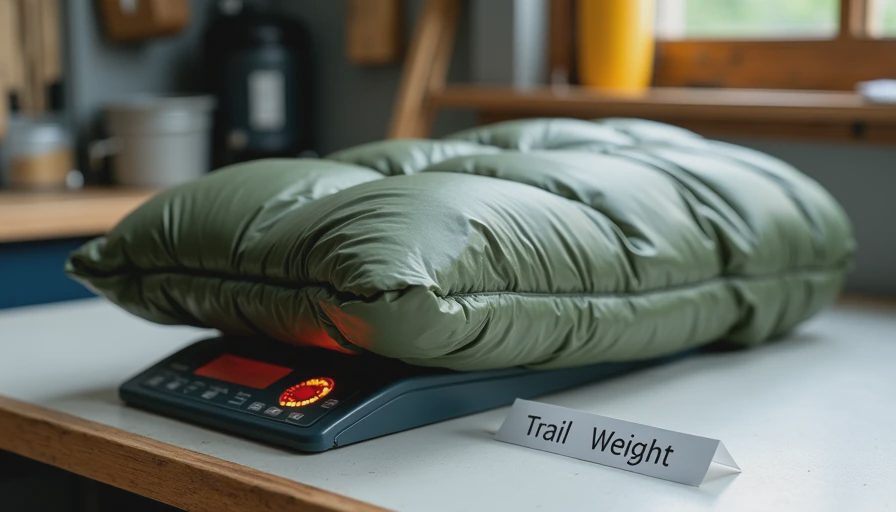
What "Trail Weight" Actually Means
Here's the industry definition: trail weight is the weight of the bag or tent with its minimum required components—no stuff sack, no extra stakes, no compression straps, no repair kit. Just the bare shell.
For a sleeping bag, that means:
The bag itself
Maybe the included stuff sack (some brands count it, some don't)
Nothing else
For a tent, that means:
The fly
The inner tent
Just enough stakes to pitch it (usually the lightest ones in the set)
Not the footprint
Not the extra stakes
Not the repair patches
Not the stuff sacks
It's technically accurate. It's also basically useless for anyone who actually camps.
The Real Weight You're Carrying
Here's what I count instead, and what I found when I weighed 12 common camping items against their claimed trail weights:
Sleeping Bags
Marmot Trestles 30°F
Claimed trail weight: 3 lbs 8 oz
My scale with stuff sack: 3 lbs 12 oz
My scale with stuff sack + storage sack + included patch kit: 4 lbs 1 oz
Nemo Disco 30°F
Claimed trail weight: 3 lbs 1 oz
My scale with stuff sack: 3 lbs 6 oz
My scale with stuff sack + storage sack: 3 lbs 10 oz
The pattern: You're almost always carrying 4–8 oz more than the tag says. That's a quarter to a half pound. Doesn't sound like much until you add it up across your whole kit.
Tents
REI Co-op Half Dome SL 2+
Claimed trail weight: 4 lbs 10 oz
My scale with everything included: 5 lbs 4 oz
Add the footprint: 5 lbs 14 oz
Kelty Late Start 2
Claimed trail weight: 5 lbs 5 oz (with fly, body, poles)
My scale with fly, body, poles, stakes, stuff sacks: 6 lbs 1 oz
The pattern: Tent trail weights are arguably the worst offenders. Brands use the lightest stake set, exclude the footprint that everyone recommends you buy, and sometimes even understate the pole weight. Add a footprint and you're carrying 12–16 oz more than advertised.
Sleeping Pads
Therm-a-Rest NeoAir XLite
Claimed weight: 12 oz (regular, no stuff sack)
My scale with stuff sack and pump sack: 14.5 oz
Klymit Static V
Claimed weight: 18.6 oz
My scale with stuff sack: 20.2 oz
The pattern: Pads are closer than bags or tents, but that pump sack or stuff sack adds up. And here's the kicker—if you're using an air pad, you're carrying that pump sack anyway. So why isn't it counted?
Backpacks
This one's tricky because "trail weight" for a pack often means:
The pack itself
No hipbelt
No lid
No compression straps
Pockets emptied
Who carries a backpack without a hipbelt? Who removes the lid on a day hike? Nobody. But that's how they get that magical 1 lb 12 oz number on the website.
The reality: A true "ready to pack" weight for a 40L backpack is usually 2–2.5 lbs. The trail weight might say 1.5 lbs. That's almost a pound difference.
What I Count Instead
Here's my standard. When I say "I weighed it," here's what's on the scale:
For sleeping bags:
The bag itself, fully unzipped
The included stuff sack
The included storage sack
Any repair patches or accessories that came in the box
For tents:
The fly, inner tent, poles, and stakes
The included stuff sacks (there are usually multiple)
The footprint if I plan to use it regularly
Pole repair sleeve if included
For sleeping pads:
The pad itself
The stuff sack
The pump sack if required for inflation
Any patches or repair kit
For stoves:
The stove
The pot if it's a integrated system
The fuel canister adapter
Any included windscreen
The stuff sack or storage case
For packs:
The pack with all included removable parts attached
Hipbelt, lid, compression straps, sternum strap
Water bottle pocket elastic
Whatever else comes in the box
The "Add 15%" Rule
Here's a useful shortcut I've developed: take the claimed trail weight and add 15%. That's usually within an ounce or two of what you'll actually carry.
Claimed 2 lbs → actual 2 lbs 5 oz
Claimed 4 lbs → actual 4 lbs 10 oz
Claimed 6 lbs → actual 6 lbs 14 oz
It's not scientific. It's not pretty. But it's been shockingly accurate across everything I've tested.
Why This Matters
Look, I'm not trying to pick a fight with gear brands. The lightweight movement has pushed innovation and I'm grateful for that. But when a family camper reads "2 lbs 8 oz" on a bag, packs it, and discovers it's actually 3 lbs—that's a trust issue.
And honestly? It's a planning issue too. If you're trying to keep your total pack weight under 25 lbs for your first family backpacking trip, being off by 2–3 lbs across your whole setup can make the difference between "this is fun" and "I regret everything."
The Brands That Do It Right
Some brands are better about this than others:
Sea to Summit: Their weight listings include the stuff sack and are usually within an ounce of what I measure.
Zpacks: They list "with stuff sack" and "without stuff sack" separately. I appreciate the transparency.
Enlightened Equipment: Detailed weight breakdowns that include every component. No surprises.
My Personal Gear Weight Log
Here's a snapshot of what I'm actually carrying right now for a standard three-season trip:
Item | Claimed Weight | My Measured Weight | Difference |
|---|---|---|---|
Sleeping bag (Nemo Disco 30) | 3 lb 1 oz | 3 lb 10 oz | +9 oz |
Tent (REI Half Dome SL 2+) | 4 lb 10 oz | 5 lb 14 oz (with footprint) | +20 oz |
Sleeping pad (Therm-a-Rest NeoAir) | 12 oz | 14.5 oz | +2.5 oz |
Backpack (Osprey Exos 48) | 2 lb 8 oz | 2 lb 15 oz | +7 oz |
Stove (MSR PocketRocket 2) | 2.6 oz | 3.2 oz (with stuff sack) | +0.6 oz |
Total difference: about 39 oz—that's 2.4 lbs more than I'd expect from the listed weights.
The Bottom Line
"Trail weight" is a marketing number. It's useful for comparing products from the same brand if they use the same measurement standard. It's useless for comparing across brands because everyone counts different things.
When I say "I weighed it so you don't have to," I mean I weighed the thing the way you'll actually use it. Stuff sack included. Accessories included. If it comes in the box and you're going to carry it, I count it.
Good spec, mediocre experience? Sometimes the trail weight is a great spec that doesn't match what you actually carry. And that's worth knowing before you buy.
— Tom



Letters
No letters yet — be the first to write.