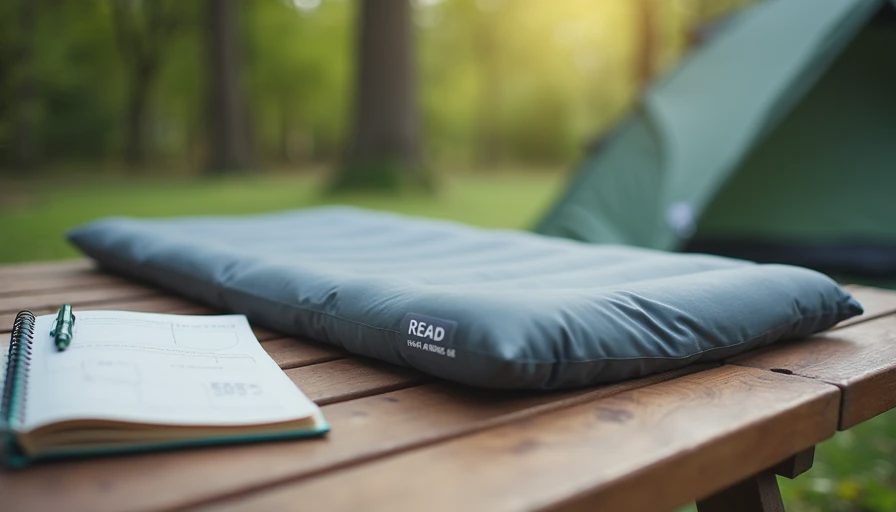
I weighed it so you don't have to.
Here's the thing about sleeping pad specs: they're full of jargon that sounds important but doesn't actually tell you anything useful. "Thermal efficiency." "Heat reflective technology." "Superior insulation." What does any of that mean when you're trying to figure out if a pad will keep your butt warm on a 40-degree Ohio spring night?
Enter R-value. It's the single most useful number on a sleeping pad spec sheet. And nobody explains it well.
Let's fix that.
What R-Value Actually Means
R-value measures resistance to heat loss. Specifically, how well your pad prevents your body heat from escaping into the cold ground. The higher the number, the more insulation you get.
Here's the key: a sleeping pad isn't "warm." It doesn't generate heat. It just slows down the transfer of your warmth into the earth. Think of it like your house insulation—keeps the warm in and the cold out, works both ways.
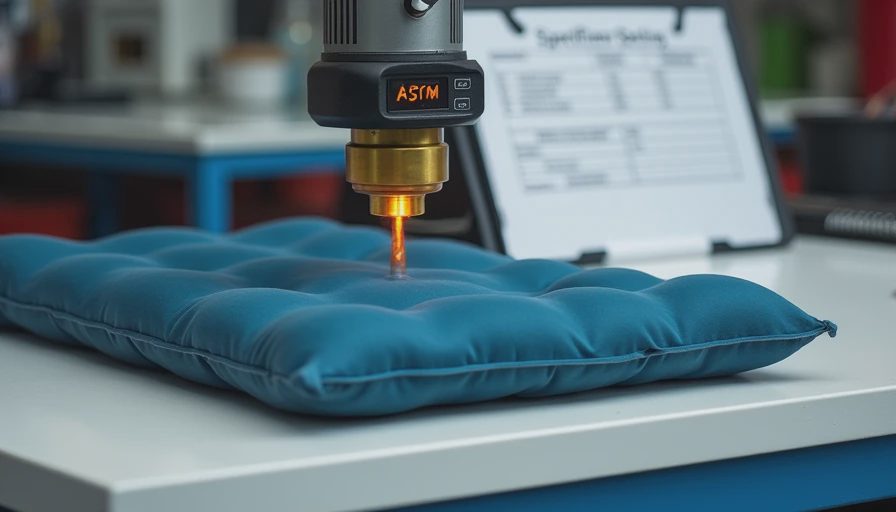
Since 2020, the outdoor industry has used a standardized test called ASTM F3340. If you see "ASTM F3340" on the box, that R-value number means something. It's been tested in a lab, not just guessed at. If you don't see that icon? You're dealing with an educated guess at best.
What R-Value Do You Actually Need?
Here's the short version:
R-Value Range | What It's Good For |
|---|---|
1–2.5 | Summer only. Warm nights, mild ground temps |
2.5–4 | Spring and fall. Shoulder-season camping |
4–6 | Three-season workhorse. Most backpacking and camping pads live here |
6+ | Winter. Below-freezing temps, frozen ground |
For an Ohio spring night—say, April or May, temperatures dipping into the 30s or 40s—you want something in the 3–5 range. That's enough insulation to keep the ground chill from seeping through without being overkill for summer trips.
Real-World Examples
Here's how some actual pads stack up:
Exped Dura 3R
R-value: 2.9
Good for: spring/summer/fall
Temp rating: about 20°F
Therm-a-Rest NeoAir XLite NXT
R-value: 4.5
Good for: three-season use
Warm enough with a quilt down to about 15°F
Big Agnes Rapide SL Insulated
R-value: 4.8
Good for: most three-season conditions
Might not be enough for winter
Exped Ultra 6.5R
R-value: 6.9
Good for: winter camping
Keeps you warm on snow, single-digit temps
NEMO Tensor Extreme Conditions
R-value: 8.5
Good for: truly arctic conditions
The "Too Warm" Myth
Here's a question I get a lot: "If I buy a high R-value pad, will I be too hot in summer?"
No. That's not how it works.
Remember: the pad just slows heat transfer. In summer, the ground is warmer—there's less temperature difference between you and the earth, so your body doesn't lose as much heat. The same pad that keeps you warm at 30°F will just feel like a comfortable barrier at 70°F.
It's like house insulation—keeps heat in during winter, keeps heat out during summer. A high R-value pad doesn't overheat you in warm weather. Buy for the coldest conditions you'll face and you're covered for everything else.
What R-Value Doesn't Tell You
R-value is important. It's not the whole story.
Stability matters. When you move around on an unstable pad, you push air back and forth, which dissipates the warm air you've built up under your body. A pad with internal baffles or suspension points keeps that air in place, which means better real-world warmth even if the R-value is the same.
The ground temp matters more than the air temp. You need to know how cold the ground is, not just the air temperature. Wet ground conducts energy better than dry ground, so you need more insulation in damp conditions.
Your sleeping bag isn't the main thing. Your sleeping bag insulates you from the air above. The pad insulates you from the ground below. If the ground is cold, no sleeping bag will save you—the cold seeps straight through your compressed insulation.
The Foam Pad Trick
Here's a neat one: R-values stack.
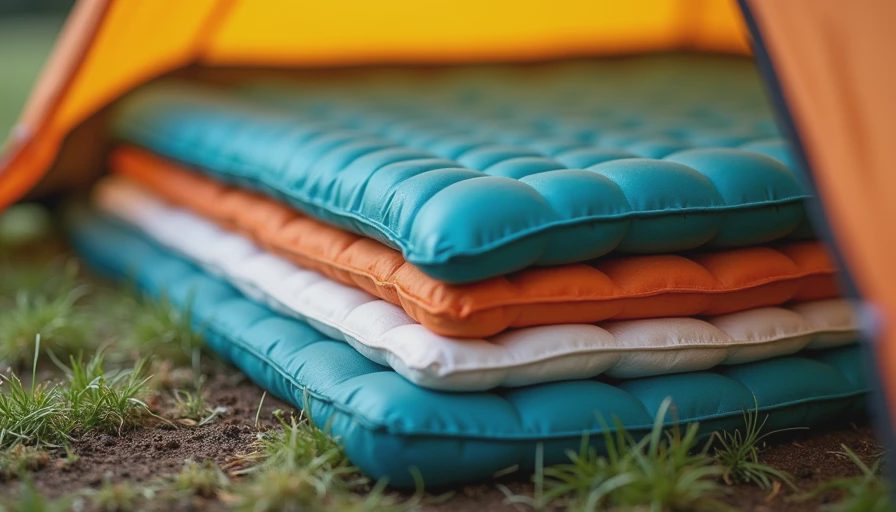
Put a closed-cell foam pad under your inflatable pad, and you add its R-value to the total. A foam pad with an R-value of 2 under an inflatable with an R-value of 4 gives you an effective R-value of 6.
The Exped Flex 3R is a 1.2-inch thick foam pad with an R-value of 2.8. The Big Agnes TwisterCane foam pad has an R-value of 1.7. Stack either under your inflatable for a cold-weather boost—plus puncture protection.
What I Actually Use
For Ohio spring, summer, and fall, I use a pad with an R-value around 4.5. It's warm enough for the shoulder seasons, comfortable in summer, and doesn't weigh too much.
For winter trips—yes, I occasionally drag the kids out when it's cold—I stack a foam pad underneath. Adds about 2.0–2.8 to the R-value and gives me peace of mind if the inflatable springs a leak.
The Bottom Line
R-value is your friend. It's the one spec that actually tells you if a pad will work in the conditions you camp in. Don't overthink it. Don't assume the marketing hype means anything. Look for the ASTM F3340 label, check the number, and match it to the seasons you actually camp in.
Good spec, mediocre experience? An R-value isn't a guarantee of comfort, but a tested R-value is the only way to know your pad will keep the cold out. The rest is just your sleeping bag, your tent site, and your willingness to accept that Ohio spring weather is a lie.
— Tom



Letters
No letters yet — be the first to write.