Cold weather sleeping bags sound like a simple purchase until you are standing in a chilly campground at 6:15 a.m., trying to decide whether your toes are numb or merely deeply offended. The useful answer is not always the bag with the lowest temperature printed on its stuff sack. The best cold weather sleeping bags combine a realistic rating, enough insulation for your body, a suitable sleeping pad, and a shape you can actually sleep in.
For this guide, I am focusing on ordinary family camping, car camping, and short trips rather than winter mountaineering. I care about repeatable details: packed size, weight, zipper behavior, draft control, and what happens when the temperature drops below the forecast. I weighed it so you do not have to, although my kitchen scale has now seen more sleeping bags than cookies.
Start with the temperature rating
Temperature ratings are useful, but they are not a promise that every sleeper will feel comfortable at that number. A bag labeled 20 degrees Fahrenheit often has a comfort rating higher than its lower limit. The comfort rating is the better starting point for a cold sleeper or a family member who tends to kick off blankets at home but somehow becomes a burrito at camp.
For fall camping in much of the Midwest, a 20-degree bag is a flexible choice. A 30-degree bag can work for mild shoulder-season nights, but it offers less margin when the forecast changes. For occasional snow camping, look at 0-degree models, but expect more weight, bulk, and cost. Brands such as REI Co-op, Kelty, Marmot, Big Agnes, and Sea to Summit offer several temperature ranges, though their designs and testing details differ.
Do not shop from the overnight low alone. Add a buffer for wind, humidity, fatigue, and an inaccurate campsite forecast. A forecast of 35 degrees beside a damp lake can feel less pleasant than a dry 28-degree night in a sheltered site. Good cold weather sleeping bags give you usable margin instead of requiring a perfect forecast.
Insulation: down versus synthetic
Down insulation generally delivers the best warmth for its weight and packs smaller. A quality down bag can be a sensible investment if you backpack, have limited storage, or regularly carry gear for more than one person. The downside is moisture. Wet down loses loft and dries slowly, which is not ideal when a child spills a water bottle inside the tent at midnight.
Synthetic insulation is usually heavier and bulkier, but it handles damp conditions more gracefully and often costs less. For car camping, synthetic cold weather sleeping bags can be the practical choice. A Kelty Cosmic Down, for example, may appeal to shoppers focused on lower weight, while a synthetic REI or Marmot model can make more sense for damp weekends and repeated family use. Compare the actual packed dimensions rather than assuming one insulation type always wins.
The shell fabric matters too. A water-resistant exterior helps with condensation and accidental contact with a wet tent wall, but it does not turn a sleeping bag into rain gear. Store either type loosely at home, ideally in a large storage sack. Keeping a lofty bag compressed for months is an efficient way to reduce its useful life.
The sleeping pad is half the system
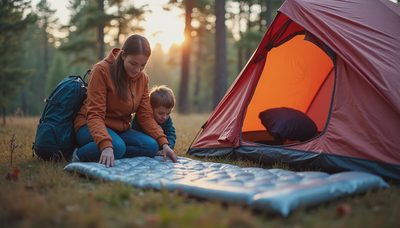
Many cold sleepers blame their bag when the real problem is the pad underneath them. Your body loses heat to the ground, and a thin summer pad can make an expensive winter bag perform like a disappointing blanket. Look for an insulated pad with an appropriate R-value; higher values generally provide more protection from cold ground.
For three-season family camping, an insulated air pad or a foam-and-air combination is usually a meaningful upgrade over a basic uninsulated mattress. Put a closed-cell foam pad underneath if the ground is especially cold or rocky. This also protects an inflatable pad from sharp surprises, including the small stick that somehow survives every campsite inspection.
Test the complete system at home before a trip. Put the bag, pad, sleep clothes, and pillow together on a basement floor or backyard tent night. If your back touches cold ground or your shoulders press against a narrow pad, buying a warmer bag may not solve the problem. Cold weather sleeping bags work best when the pad, clothing, and shelter are treated as one setup.
Fit, hood, and draft control
A snug bag is warmer because it leaves less empty air for your body to heat. However, too little room makes it difficult to wear a thin layer or turn comfortably. Mummy shapes are efficient for cold weather, while rectangular bags are easier for restless sleepers and younger campers. Semi-rectangular designs split the difference.
Check the shoulder and hip measurements, not only the listed height range. A tall sleeper may fit lengthwise but still feel cramped across the shoulders. A bag that is too large can also create cold pockets around the feet. Conversely, compressing insulation with bulky clothing can reduce loft and warmth.
A well-designed hood, draft collar, and draft tube along the zipper are small features with large effects. Run the zipper before buying if possible. Some inexpensive bags snag easily, and zipper frustration is remarkably powerful before breakfast. A two-way zipper can help with ventilation, while a full-length zipper makes a bag more useful as a blanket during warmer nights.

What to spend for family camping
A reasonable synthetic bag for casual camping often costs around $80 to $160. Better insulation, lighter fabrics, and lower packed weight can push prices into the $180 to $350 range. Premium down bags frequently cost more than $300, with high-end winter models going considerably higher. You do not need the most expensive option for a campground beside a paved road.
Spend first on the temperature range you actually use, then on a dependable pad. A $120 bag on a good insulated pad can be more comfortable than a $300 bag on a thin air mattress. If two adults share a tent, matching bags are not required, but similar temperature ratings simplify packing and reduce the chance that one person brings a summer bag to an October trip.
For children, prioritize warmth, easy zippers, and a fit that is not comically oversized. A bag that is too long leaves extra space at the feet. Stuffing a spare fleece around the footbox can help temporarily, but a properly sized youth bag is more efficient. Cold weather sleeping bags for kids should also be easy to air out after breakfast, because no one wants to pack yesterday's damp cereal smell.
A practical buying checklist
Before ordering, write down the coldest temperature you realistically expect, not the most dramatic trip you imagine taking someday. Decide whether the bag will live in a car-camping bin or travel in a backpack. Measure your storage space and compare the packed size. Confirm the temperature rating type, insulation, user dimensions, zipper side, and return policy.
Then inspect your sleep system as a group. Does your pad have insulation? Do you have a dry base layer, warm socks, and a hat? Can the tent control condensation? Are you likely to camp in rain, where synthetic insulation earns extra points? These answers narrow the field faster than reading another forty reviews.
My short recommendation is straightforward: choose a 20-degree bag for broad three-season flexibility, synthetic insulation for damp family trips, and down when low weight and compact packing matter more. Cold weather sleeping bags are tools, not trophies. Buy the one that fits your actual weekends, pair it with a decent pad, and test the setup before the forecast gets interesting.



Letters
No letters yet — be the first to write.